


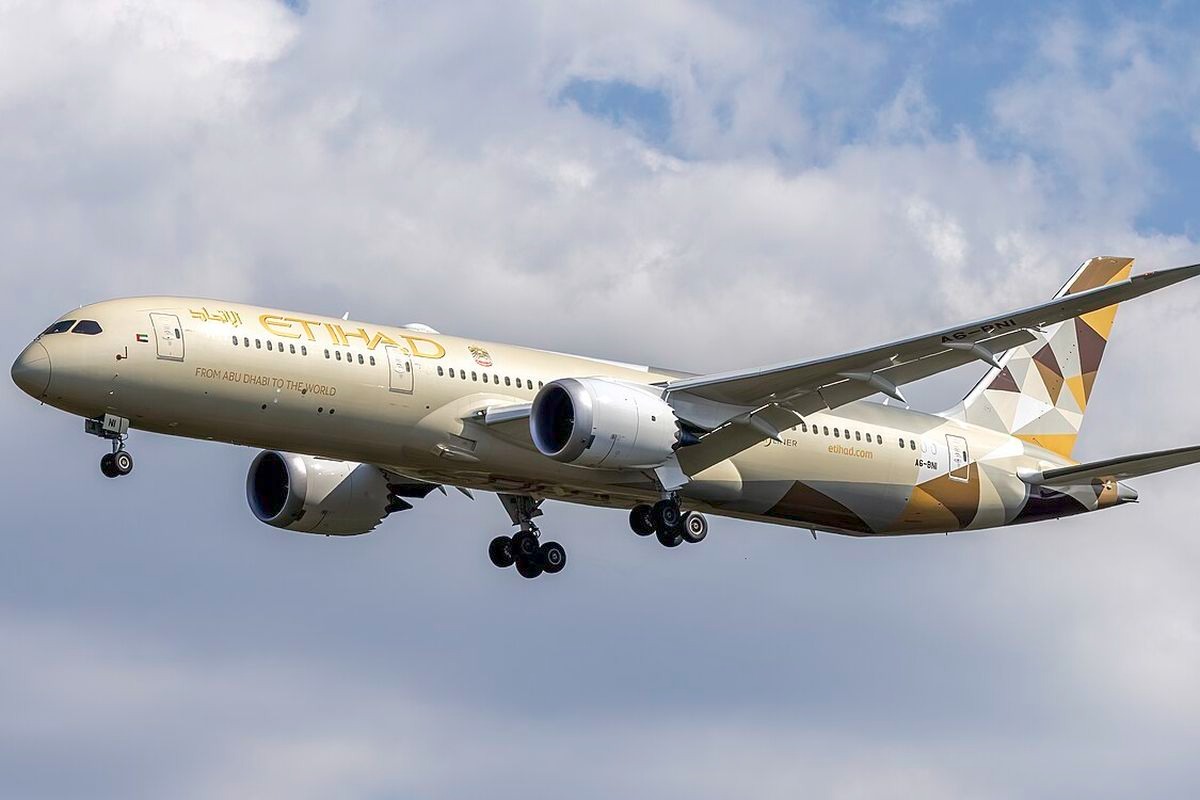
The latest report on the world’s safest airlines for 2026, published by AirlineRatings.com, has placed Etihad Airways at the top of the full-service airline category. The comprehensive ranking evaluated over 320 global operators, highlighting significant improvements in areas such as turbulence management, incident reporting transparency, and independent safety audits.
The rankings combine operational data, including accident history relative to total flights, fleet age, participation in global safety programs, and the level of training and audits for both pilots and cabin crew. According to Sharon Petersen, CEO of AirlineRatings.com, the score differences among airlines are very narrow, suggesting that small point gaps do not indicate major safety disparities. “The top 14 full-service carriers are separated by fewer than four points, and the leading six are separated by only 1.3 points, showing how competitive safety performance is this year,” Petersen noted.
Etihad Airways: First Gulf Carrier to Lead Safety Rankings
Etihad Airways becomes the first Gulf-based carrier to reach the top position in AirlineRatings.com’s full-service airline safety rankings. Key factors behind its achievement include a relatively young fleet, strong cockpit safety procedures, a crash-free operational history, and a very low incident rate per flight. The airline’s participation in independent onboard safety audits and international turbulence injury prevention programs further reinforced its ranking. Petersen emphasized that internal risk management practices, not just incident records, play a major role in overall safety evaluations.
Top 25 Safest Full-Service Airlines 2026
The complete list of the 25 safest full-service airlines includes carriers from Asia, Europe, and the Middle East, with Asia dominating the top positions:
Etihad Airways
Cathay Pacific
Qantas
Qatar Airways
Emirates
Air New Zealand
Singapore Airlines
EVA Air
Virgin Australia
Korean Air
STARLUX Airlines
Turkish Airlines
Virgin Atlantic
ANA (All Nippon Airways)
Alaska Airlines
TAP Air Portugal
SAS (Scandinavian Airlines)
British Airways
Vietnam Airlines
Iberia
Lufthansa
Air Canada
Delta Air Lines
American Airlines
Fiji Airways
Notable highlights include Singapore Airlines’ return to the top 25 after missing the 2025 list, thanks to strengthened internal safety practices and successful turbulence risk management programs. Meanwhile, younger carriers such as STARLUX Airlines and Fiji Airways demonstrated that newer airlines can achieve high safety standards with strong management and operational practices.
Safest Low-Cost Airlines 2026
AirlineRatings.com also released the top 25 safest low-cost airlines, assessing carriers that generally offer no-frills services but maintain rigorous safety standards. HK Express topped the list for the second consecutive year, driven by a modern fleet, very low incident rates, and near-perfect onboard safety audits. Spring Airlines China made its debut, marking the first Chinese low-cost carrier to enter the global top 25, signaling that rapidly growing airlines from major markets can compete with established operators on safety.
Safety Indicators and Industry Trends
The report emphasizes turbulence injury prevention as a key safety indicator, reflecting growing concerns over passenger and crew injuries during unexpected turbulence. Airlines’ participation in programs like IATA Turbulence Aware 1 has become a critical factor in rankings. Transparency in incident reporting, not only in frequency but also in detailed disclosure, is increasingly valued by evaluators.
The 2026 lists show that while all carriers experienced minor incidents over recent years, incident rates per flight remain extremely low, ranging from 0.002 to 0.09.
About AirlineRatings.com
AirlineRatings.com is an independent platform that evaluates airline safety worldwide. Its ratings are used by consumers, industry observers, and aviation stakeholders to assess relative safety risks among carriers. Methodologies combine historical data, independent safety audits, fleet age, and operational indicators relevant to cockpit and cabin safety practices. Transparency and participation in international safety programs are critical components in determining overall ranking positions.


